Showing posts with label Hillary Clinton. Show all posts

Thursday, October 11, 2007

There goes the electability arguement

A recently release Quinnipiac poll has Rudy Giuliani struggling head to head with Hillary Clinton in many battle ground states.

This certainly hurts his elect-ability argument.

The bottom ine:

Matchups by the independent Quinnipiac (KWIN-uh-pe-ack) University poll finds:

  • Florida: Clinton tops Giuliani 46 - 43 percent, breaking a 44 - 44 percent tie September 12;
  • Ohio: Clinton tops Giuliani 46 - 40 percent, compared to 47 - 40 percent September 6;
  • Pennsylvania: Clinton beats Giuliani 48 - 42 percent, up from 46 - 44 percent August 23.

"The news just keeps getting better for Sen. Clinton. She has a Democratic primary lead over Sen. Obama ranging from 27 to 34 points in Florida, Ohio and Pennsylvania and is widening her margin over the Republican hopefuls in each of those three critical states," said Peter A. Brown, assistant director of the Quinnipiac University Polling Institute.


(H/T: NRO's The Campaign Spot)

Wednesday, October 03, 2007

GOP Downballot Considerations

Interesting article from RollCall about the impact the GOP nominee for POTUS will have on downballot races. Regardless of whom our nominee may be, having Clinton on the ballot only helps Bob Schaffer.

From RollCall

Amid much discussion of the impact Sen. Hillary Rodham Clinton (N.Y.) could have on downballot Congressional races next year if she is the Democratic presidential nominee, a much quieter debate has begun among Republicans about the potential pros and cons of their presidential frontrunners when it comes to picking up House and Senate seats.

The belief among many Republican Members and strategists is that if Clinton is on the ballot in 2008, it will matter little who her opponent is because the GOP’s base and conservative independents will turn out in droves to cast an “anti-Hillary” vote. Still others in the party argue that mobilizing the base won’t be the party’s primary problem next year. Instead, it will be appealing to the moderate and independent voters who are credited with handing control of Congress to Democrats in the 2006 elections.

Already, the battle for the House is shaping up to be waged largely in suburban districts in the Northeast and Midwest. Additionally, the top targets in the Senate are Republicans representing Democratic-leaning states like Maine, Minnesota, New Hampshire and Oregon.

Backers of former New York Mayor Rudy Giuliani (R), who continues to lead the GOP field in most national polls, say he is the best-positioned candidate to appeal to the more moderate electorate in those areas.

Rep. Peter King (R-N.Y.), a leading Giuliani booster in the House, argued it is paramount to have a candidate at the top of the ticket who can appeal to former Reagan Democrats and independent voters in places like New Jersey, Illinois, Pennsylvania and Florida.

King said he has discussed Giuliani’s downballot impact with high-ranking Republicans, whom he declined to name.

“They agree that we have the best chance of picking up seats, if not taking back the House, with Rudy on top,” King said. “He would run stronger [in swing areas] than any of the other Republicans.”

King said Giuliani could especially aid vulnerable Republicans in New York. Reps. Jim Walsh (R-N.Y.) and Randy Kuhl (R-N.Y.) face competitive races again in 2008, and the GOP also has hopes of winning back the seats currently held by freshman Reps. Kristen Gillibrand (D-N.Y.) and John Hall (D-N.Y.).

Recent Democratic polling appeared to back up the notion that Giuliani would run best in swing territory.

An August survey done by Democratic pollster Celinda Lake, who is working for Sen. Joseph Biden (D-Del.) in the 2008 presidential race, showed the former New York mayor ahead of both Clinton and Sen. Barack Obama (D-Ill.) in 31 Democratic-held House districts that are considered to be the most competitive.

The poll, reported on last month by The Washington Post, also showed that the two leading Democratic contenders could even be a drag on the incumbent lawmakers’ re- elections.

Meanwhile, supporters of former Massachusetts Gov. Mitt Romney (R) and Sen. John McCain (R-Ariz.) are more apt to argue that the top of the Republican ticket will have little impact downballot, and some say it shouldn’t be among the top criteria when choosing a nominee.

“Whoever is on the ballot opposite Hillary Clinton is going to ride a huge wave of popular support as the anti-Hillary,” said Rep. Mike Rogers (R-Ala.), who is backing Romney.

He added that either Romney or Giuliani “is going to do very well in the South” as the party’s nominee.

Rep. Bill Shuster (R-Pa.), another Romney supporter, noted the former chief executive’s business background will help him appeal to conservatives, moderates and independents alike. He said above all else, the public is looking for change and a competent leader and that Romney’s “sunny disposition and positive outlook” will win voters over if they don’t agree with him on all issues.

Other Republicans contend that it won’t matter which name is at the top of the party’s ballot come next year, just as long as it isn’t Bush.

When the Republican nominee emerges in February or March he will become the national face of the party, and lawmakers contend there will be much less talk about President Bush’s low poll numbers.

“I think that gives us the opportunity to restore some of the Republican brand that we’ve lost,” McCain backer Rep. Steven LaTourette (R-Ohio) said.

While Republican House Members are more likely to be directly affected by the success or failure of their party’s presidential pick, Senate incumbents also are mindful of the impact the top of the ticket may have on their reelection hopes, especially given the difficult landscape the party faces.

With 22 Republican Senate seats in play, fundraising faltering and recruitments stalled, the party’s presidential nominee could prove critical to incumbents’ successful re-elections.

Too conservative a nominee could easily damage the chances of a vulnerable Senator running in a swing state, while a more moderate White House hopeful — such as Giuliani — could actually boost those incumbents’ odds at re-election.

Sen. Norm Coleman (Minn.), who is among the GOP’s most threatened Senators in 2008, said Giuliani would clearly be an asset to his campaign and that “there’s no question [Giuliani] has a chance to win Minnesota.”

Coleman, who has not endorsed a 2008 contender, said he is not concerned that the more socially conservative White House hopefuls would hurt his chances, either.

“There are no negatives in this, and potentially there’s a strong upside,” Coleman argued.

Giuliani supporters have long avowed that he is the only candidate who can change the electoral college math, putting traditionally blue states in play and forcing Democrats to spend money in states like California, New Jersey, Connecticut, Michigan and New York.

There are eight House Republicans whose districts were carried by Sen. John Kerry (D-Mass.) in the 2004 presidential race. Giuliani has been endorsed by four of them, including Rep. Charlie Dent (R-Pa.).

Dent said one of his reasons for endorsing Giuliani was that he believed he would be the best person to run with in his Democratic-leaning district.

“Rudy Giuliani will give the greatest assistance to candidates running in the mid-Atlantic and Northeast regions and help bring more independents back into the Republican column,” he said.

Sen. Lindsey Graham (R-S.C.), a McCain backer also up for re-election in 2008, agreed Giuliani could make things easier for moderate Republicans in cycle. But he also argued that McCain — who has broken ranks with conservatives at times — could help his party’s candidates in swing states.

“We need to play in the blue states and we need a nominee who can put the blue states in play,” Graham said.

Rep. Tom Davis (R-Va.), a former top party strategist and potential 2008 Senate candidate, said it would be impossible to predict now which candidate might be a drag or boost downballot. But he agreed that the nominee can make a huge difference, citing the 1964 and 1972 presidential elections as evidence of one-sided landslides that impacted Congressional races. Voters traditionally are less prone to ticket splitting in presidential years, he said.

Other party operatives argue that President Bush had little to no coattails in the 2000 and 2004 elections and that similarly, the down-ballot impact for both parties will be minimal next year.

Sen. John Sununu (R-N.H.), who faces a difficult re-election next year, narrowly won an open House seat in 1996 — as then- President Bill Clinton carried the district with 48 percent, compared to former Sen. Bob Dole’s (R-Kan.) 40 percent. Independent candidate Ross Perot got 10 percent.

“In that case, it didn’t have too significant an impact,” he said. “But I can’t predict the future.”

Thursday, September 20, 2007

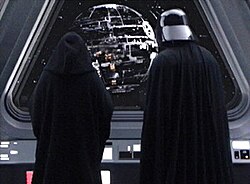
Dick, I am your father...

Politico.com's Ben Smith blogs about the more humorus ramifications of Hillary Clinton calling VP Dick Cheney "Darth Vader":


I've gotten a bunch of e-mail this morning from the, er, small subset of political junkies who are also Star Wars geeks, and a couple of things are clear:


George Bush is Emperor Palpatine.


Before he became evil, Dick Cheney was a great and good Jedi. (Possibly during the Gerald Ford administration. Was this reported at the time?) And in his final act, he redeems himself by taking down the Emperor. (Still time?)

Friday, August 31, 2007

Mark Udall and Hillary Clinton Take Donations From Known Felon

First reported at ToTheRight.

This morning’s New York Times has reported Hillary Clinton will take nearly $25,000 of the felon-fugitive/Democratic-uberfundraiser Norman Hsu’s various campaign contributions and unload them on unnamed charities.

Unfortunately for the Democrats, Hsugate doesn’t end with Clinton, because she isn’t the only candidate who benifted from his corrupt cash: Our very own U.S. Senate wannabe, Mark “Screwball” Udall, D-People’s Republic of Boulder, had no problem accepting $1,000 of it on June 25 of this year. And just like with the Abramoff scandal, the dirty-money flow doesn’t stop there.

Udall has received $5,000 from the PAC For A Change, the Barbara Boxer-led liberal leadership PAC, which itself took $2,000 from Hsu. Udall got $10,000 from the Searchlight Leadership Fund, the Harry Reid-steered PAC, which Hsu and his front donors gave a total of $3,000. Worst of all, Udall accepted about $40,000 from the Democratic Senatorial Campaign Committee and Democratic Congressional Campaign Committees, which received a whopping total of $82,333 from Hsu and his cohorts.

So, will Udall and his supporters continue to attack Republican U.S. Senate canididate Bob Schaffer for accepting legal donations, or will they clean up their own homes before they worry about someone else’s? We suspect Udall won’t be calling Merry Maids anytime soon.

Breaking: Udall will donate the $1000 donation to the Colorado National Guard Fund.

Wednesday, August 22, 2007

Romeny's Unfavorables surpass Hillary

Rasmussen Reports released a poll that has Mitt Romney's unfavorable ratings higher than Hillary Clinton's.

The salient details:

The Rasmussen Reports national telephone survey found that 44% of Likely Voters would definitely vote against Romney if he’s on the ballot in 2008. That’s a point higher than the 43% who would definitely vote against Clinton.


more:

In terms of partisan reaction, it’s interesting to note that 25% of Republicans say they would definitely vote against Romney while 22% of Democrats would vote against Edwards.


Among unaffiliated voters, 44% say they will definitely vote against Clinton and 41% say the same about Romney.


Clinton does a better job of uniting Republicans than any other candidate. Seventy-six percent (76%) of the GOP faithful say they’ll definitely vote against the former First Lady. Only 61% of Republicans say the same about Obama and Edwards.


Sixty-three percent (63%) of Democrats say they’ll definitely vote against Romney.

Tuesday, May 29, 2007

Clinton supports "shared prosperity"

Shared prosperity = communism

From the AP:

MANCHESTER, N.H. (AP) -- Presidential hopeful Hillary Rodham Clinton outlined a broad economic vision Tuesday, saying it's time to replace an "on your own" society with one based on shared responsibility and prosperity.

he Democratic senator said what the Bush administration touts as an "ownership society" really is an "on your own" society that has widened the gap between rich and poor.

"I prefer a 'we're all in it together' society," she said. "I believe our government can once again work for all Americans. It can promote the great American tradition of opportunity for all and special privileges for none."

That means pairing growth with fairness, she said, to ensure that the middle-class succeeds in the global economy, not just corporate CEOs.

"There is no greater force for economic growth than free markets. But markets work best with rules that promote our values, protect our workers and give all people a chance to succeed," she said. "Fairness doesn't just happen. It requires the right government policies."